Understanding the SQE2 oral assessment breakdown

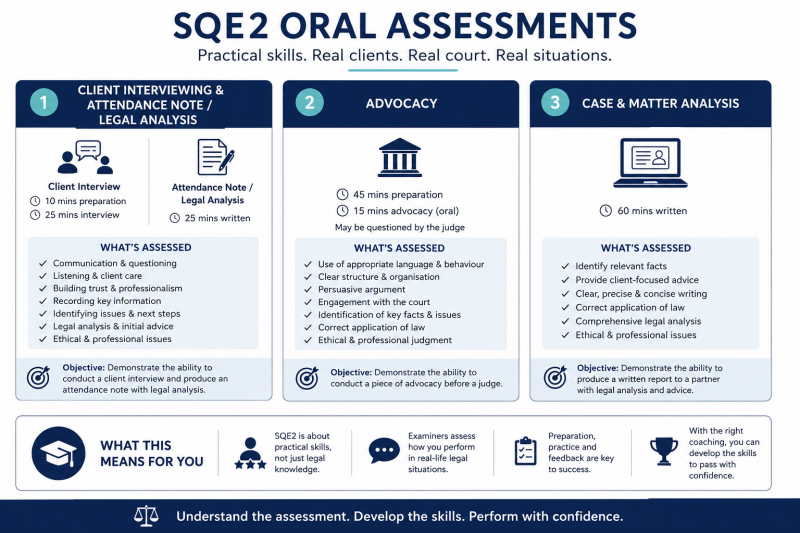
The Solicitors Qualifying Examination (SQE2) is not merely a test of legal knowledge; it is a comprehensive assessment of your practical legal skills. Success hinges on your ability to communicate effectively, analyse complex legal problems, provide sound client advice, and present compelling arguments under realistic assessment conditions. With dedicated preparation, consistent practice, and constructive feedback, these essential skills can be developed and refined, significantly enhancing your prospects of passing.
Frequently asked questions about SQE2

Students often have numerous questions and concerns regarding the SQE2 assessment. This section aims to provide clarity on the SQE2 process, explain precisely what examiners are looking for, and demonstrate how focused preparation and realistic practice can dramatically improve your chances of success.

What exactly is assessed in SQE2?

SQE2 assesses a range of practical legal skills including client interviewing, attendance note and legal analysis, advocacy, professional conduct and ethics, legal research application, and effective communication techniques.

How different is SQE2 from SQE1?

SQE1 primarily tests functioning legal knowledge, while SQE2 focuses entirely on the application of practical legal skills. SQE2 requires candidates to demonstrate competence in scenarios that simulate real-world legal practice.

What standard do I need to achieve to pass?

To pass SQE2, you need to demonstrate competence at the level of a newly qualified solicitor in England and Wales. This involves not only performing the tasks but also doing so in a professional and ethical manner.

How much legal knowledge am I expected to demonstrate?

While SQE2 is a skills assessment, it implicitly relies on your underlying legal knowledge from SQE1. You are expected to apply relevant legal principles accurately within the practical context of the assessment tasks.

How are client interviews and advocacy exercises marked?

Client interviews and advocacy exercises are marked based on various criteria, including your ability to gather information, advise clients, maintain professional conduct, structure arguments, and communicate effectively, among other factors.

What are examiners looking for during the oral assessments?

Examiners assess your ability to act professionally, apply legal knowledge to practical scenarios, communicate clearly, manage client expectations, and demonstrate ethical behaviour. They seek evidence of practical competence.

How can I improve my confidence and performance under pressure?

Regular practice with realistic exam-style scenarios, coupled with constructive feedback, is key to building confidence. Our tailored coaching focuses on developing strategies for managing pressure and performing optimally.

What are the most common mistakes candidates make?

Common mistakes include not addressing the client's needs sufficiently, failing to structure arguments clearly, not applying legal principles accurately, or lacking professionalism during assessments.

How should I structure my attendance notes and legal analysis?

Attendance notes should be clear, concise, and accurately reflect the client meeting, while legal analysis should be structured logically, identifying key issues, applying relevant law, and providing clear advice.

Can I pass if I struggle with public speaking or nerves?

Absolutely. Many candidates experience nerves. Our tutoring provides techniques and practice to manage anxiety, improve public speaking skills, and transform nervousness into focused performance.

Mastering the SQE2 assessment

Understanding the SQE2 assessment breakdown helps students focus their preparation on what truly earns marks. Many candidates spend excessive time revising law and insufficient time practising the very skills being assessed. By understanding precisely how client interviewing, attendance notes, advocacy, and case analysis are marked, students can target their preparation more effectively. Our tutoring service bridges the gap between legal knowledge and exam performance, providing realistic mock assessments, personalised feedback, and practical coaching aligned with SQE2 marking criteria.